May 31st, 2007 @ 2:21 am

Battlefield Earth is here

I once read Battlefield Earth. It was awful. Predictable, far too easy solutions, and just plain hokey. But still, I read it because I wanted to see humankind survive.

One thing I liked about the book was that since disaster (the arrival of aliens) struck suddenly, there were lots of stuff laying around. No one knew how to use them or what they were for, but there they were. About the only good thing about the book was how the author described the humans trying to figure out what things were.

When I was in college, oh so long ago, a professor read an anthropologist's report. It described the bizarre ritualistic behavior of the humanoids in that culture. It wasn't until the end that the listener figured out that the behavior was what most of us were doing every morning. Bathing, grooming, using mirrors, using cosmetics and perfumes, etc.

Another time, I can't remember where or when, I read an article where they pretend to have unearthed a motel. It is far in the future and no one knows what a motel is. So they try and figure out what everything was for. The concluded that it was a burial ground. The toilet seat was a crown for some deity called "Sanitizedforyourprotection". They had the bed, the remote, the television, etc. It was quite interesting.

All this leads to something, honest.

I just read an article over at Wired News about Norway's proposed ultimate seed vault: "Svalbard Global Seed Vault, a fortress for up to 3 million seed varieties on a remote island 600 miles from the North Pole. It is an interesting concept, albeit a scary one. We are fucking up our world so bad that we are having to put plant seeds under heavy guard to protect our future. How sad is that?

The project is the first comprehensive effort to protect the world's agricultural gene pool. Some 1,400 seed repositories throughout the world safeguard roughly 1.5 million varieties against crop failure and serve researchers hoping to breed desired traits. But these collections are fragmentary and loosely organized. Many are vulnerable to threats like floods, civil strife, and simple mismanagement. The Svalbard facility will be a backup to the backups, preserving the DNA of every crop on the planet along with wild relatives. Once the doors open, seeds will be released only if every other source has been depleted or destroyed.

The short article ends with a quote:

"This vault is not a time capsule," Fowler says. "It's a living institution." And while it lives, so will the crops that mankind relies on to survive.

For science fiction writers, this is, pun intended, seeds for thought. With no way to read the codes on the vaults, and perhaps no electricity, how would our future selves be able to understand what was in there? What would happen if the vault were to be lost then found again? What if global disaster did strike? Would that place become humankind's mecca? Would the person with the key become the world leader?

Linkage:

The Global Crop Diversity Trust | Svalbard Global Seed Vault

BBCNews: Work begins on Arctic seed vault

Live Science: Norway to House Seeds in Doomsday Vault (from 6/06)


Jan 30th, 2007 @ 2:44 pm

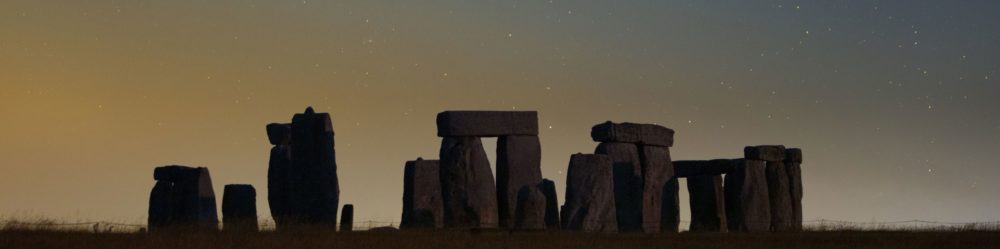
Stonehenge Village Found

I thought this was cool. For anyone who writes historical fiction, or fiction with a similar culture, this is great fodder. In explaining the "why's", the archaeologists offer writers a peek into the lives of people from that time period and allows for some in-depth setting.

From BBCNews:

Stonehenge builders' houses found

Archaeologists say they have found a huge ancient settlement used by the people who built Stonehenge.

Excavations at Durrington Walls, near the legendary Salisbury Plain monument, uncovered remains of ancient houses.

People seem to have occupied the sites seasonally, using them for ritual feasting and funeral ceremonies.

In ancient times, this settlement would have housed hundreds of people, making it the largest Neolithic village ever found in Britain.

The dwellings date back to 2,600-2,500 BC, the same period that Stonehenge was built.

link to article


Oct 28th, 2006 @ 12:33 pm

Bacteria Underground

For those of you who write SF, this article may spark some ideas. I know I had several flashes in me brain.

Bacteria Found Thriving Deep Underground

A Princeton-led research group has discovered an isolated community of bacteria nearly two miles underground that derives all of its energy from the decay of radioactive rocks rather than from sunlight. According to members of the team, the finding suggests life might exist in similarly extreme conditions even on other worlds.

The self-sustaining bacterial community, which thrives in nutrient-rich groundwater found near a South African gold mine, has been isolated from Earth's surface for several million years. It represents the first group of microbes known to depend exclusively on geologically produced hydrogen and sulfur compounds for nourishment. The extreme conditions under which the bacteria live bear a resemblance to those of early Earth, potentially offering insights into the nature of organisms that lived long before our planet had an oxygen atmosphere.

(snip)

That subterranean world, Onstott said, is a lightless pool of hot, pressurized salt water that stinks of sulfur and noxious gases humans would find unbreathable. But the newly discovered bacteria, which are distantly related to the Firmicutes division of microbes that exist near undersea hydrothermal vents, flourish there.

"The radiation allows for the production of lots of sulfur compounds that these bacteria can use as a high-energy source of food," Onstott said. "For them, it's like eating potato chips."

full article

I've got that SF I keep poking on, the one with the sentient planet. I really want the planet itself to be sentient, not some mold, fungus, or bacteria. This article opens up a whole possibility in SF, as well as in the real world.


Oct 18th, 2006 @ 2:15 pm

Biosphere 2

How many of us remember the Biosphere 2 project way back in 1991? Anyway, one of the first team members has come out with a book and WiredNews has an interview with her.

Life Inside the Biosphere Bubble

By Erica Gies
02:00 AM Oct, 18, 2006

Jane Poynter entered the world's first hermetically sealed, manufactured ecological system in 1991 with seven other people.

Biosphere 2 — the 3.15-acre, almost-airtight outpost in the Arizona desert that was to be their home for two years — proved impressively stable, although low oxygen levels and disappointing crop yields made survival a daily challenge. Eventually, pure oxygen had to be added to the system, and the team had to supplement its diet with food from an emergency stockpile stored before closure.

Throughout their stay, short tempers, depression and even the specter of insanity kept life interesting for the "biospherians." In her new book, The Human Experiment: Two Years and Twenty Minutes Inside Biosphere 2, Poynter gives an insider's view of the famous experiment. She spoke with Wired News about cult rumors, Biosphere 2's unique usefulness to climatologists and her time inside the bubble.

(snip)

WN: Rumors of dodgy science plagued Biosphere 2 during your stay. In comparing the work your team accomplished to the later work of the Columbia University teams inside Biosphere 2, do you think the science your team did was less controlled?

Poynter: It was very different. What our team was doing was asking a very basic question: Does this even work? Can you take an essentially sealed container and put what we think are developed ecosystems inside this container and have it exist for a long period of time? And if something goes wrong, can we figure out what that something is, and can we fix it? That was really what we were asking in our two-year mission. That was a very different charter than Columbia had (when the Biosphere 2 project was turned over to it in 1995)…. They were then using this thing that we had built to answer very specific questions about how corals react to elevated carbon dioxide, for instance. So it's a very different kind of science. Initially, honestly, to a large degree, it was almost an engineering project, and we were answering the question: Does it work?

(snip)

[in answering another question] And things happen faster in closed systems. Outside, you're at the mercy of this huge atmosphere that we have out here, so in order to experiment with elevated CO2 either you have to wait for it to actually go up in this giant atmosphere, or you have to build these things where you try to force CO2 over the top of the plants and that kind of thing. Whereas in Biosphere 2 the atmosphere is so tiny you can track how things move through the atmosphere, through the soil, through the plants — you can track the atoms and the molecules through the system very rapidly. And that's why Columbia University was so into it.

link to article
text in brackets [ ] are mine, not the author of the article

Oh, and Biosphere 1 is Earth itself.

I find this all interesting as it fits into the theme/plot of my WIP "Centric". I write scenes for it whenever I feel insprired enough. I need to get more serious about it, ya know?

Linkage:

WiredNews: 10 Lessons from Biosphere 2
Wikipedia: Biosphere 2 | Jane Poynter
The book "The Human Experiment: Two Years and Twenty Minutes Inside Biosphere 2"
Biospherics.org


Sep 20th, 2006 @ 12:56 pm

Butterflies

Most days I don't have the television on during the day. Even in the afternoons, we only have it on a few hours each day.

But sometimes, like if I need a cover noise or I am needing distractions, I'll turn it on. Usually that means Animal Planet. Today I saw one of my favorite shows, Backyard Habitat. They were setting up a backyard to attract the yellow tiger swallowtail and the ruby throat hummingbird.

A few weeks ago, Joella and I were wandering the yard and a big shadow got my attention. I looked up to see this huge yellow butterfly. That thing had to be a good 6" across. Lorna said it was a tiger swallowtail. So, with today's show reminding me, I decided to look it up.

First, of course, I went to Wikipedia. While no result for "tiger swallowtail" came up, I went to "butterflies". In the external links. From there I went to Butterflies and Moths of North America. And that is where I hit pay dirt (whatever that means).

At this website, you can do a keyword search for specific butterfly species. Or, better yet, do a map search. I narrowed it down to North Carolina, then to Buncombe County. Cool.

I have a scene in Simple Sarah where she is trapped in a landslide and befriends this beetle while she awaits rescue. I'm keeping the beetle, but I am thinking that a butterfly chrysalis opening where she can see it would be interesting for the character. The website gives me a chance to look up a similar part of the U.S. and ensure I get the time of year right as well as the process. Since she comes out of the experience as a different, or at least further evolved, person, the butterfly thing will help tremendously.

Way freakin' cool. I love it when I get ideas like this. It's like a charge to my creative self.


Sep 2nd, 2006 @ 9:43 pm

SF Thoughts

(I've already written this post once. Then hit the wrong button and poof! it were gone. [insert appropriate foul language here])

If you've read any science fiction (SF) and/or fantasy (F), you've probably read about evil spores or fungi or flora. Darkover had the flower spores that made everyone go into a mass orgy. Other novels have had fungi that gave consumers magic powers. I believe this theme is, like, way overdone.

So I've got this SF novel that I am working on. It's the one with the sentient planet. I need a way for the planet to observe/feel/communicate with the critters, including the silly humans, that live on its skin. Since a planet has a large amount of skin, I feel there needs to be some other method for it to receive and respond to information.

The novel is about symbiosis vs parasitic. I am considering using critters, and perhaps plants, that have use electricity in some way such as for communication or to attract/catch prey. Since a planet has a magnetic field and, to some degree, an electric field, it would be not too large a leap for the planet to be able to speak and hear via that electricity. We humans are just "ugly bags of mostly water" and electric impulses. There are electric eels, electric rays, electric catfish, and, of course, the mundane lightning bug (aka firefly). Bats and some water mammals use sonar.

What do y'all think of this idea? Is it do-able?

I want the planet itself to be sentient, not some large mushroom spore. I want the planet to be aware of the critters that live on its skin.

Note:
I found a way cool site (via Wikipedia) for animalia research: Animal Diversity Web


Jun 3rd, 2006 @ 1:44 pm

Trees

Got some good writing in last night. The new project is up over 5000 words which is great!

I haven't a clue where it is going though so it slowed down this morning. I've only gotten, like, maybe 200 words all day.

Lorna and I have talked some about Simple Sarah, book one of the Thobian Chronicles. What we've decided is that I will write all three of them at once, as if they were one huge book. Then I'll decide where book one will end, edit up to there, submit it, then start editing the next one. Make sense?

The new project is about trees. I've done some research about them previously for both Simple Sarah and Wayback. Some of this new book has taken a lot from Wayback in terms of trees and religion.


::Older Posts


-- Pun of the Day:
-- Copyright © 2003 - 2008, Thought Patterns | Contact Me | Blog Sitemap | Blog Help

-- PaulaOffutt.com | Site Map | Website Help

-- KG4VPY | HolyRoller.org | Southern SDs | Sumo, The Goldfish

-- Powered by WordPress version 2.2.2 in just 2.13 seconds | RSS 2.0 | Comments RSS 2.0

-- Theme is ThotRot, based on WordPress Classic | This blog contains 1689 posts for a total of 454922 words resulting in 960 comments.


Spam Karma 2 has killed 512497 comments; moderated 339 comments; and passed 1198 comments.

-- Googlebot visited this page Wednesday, November 12, 2008


donation logo | Green Web Hosting! This site hosted by DreamHost. | counter | 7/16/05 | Creative Commons License logo |